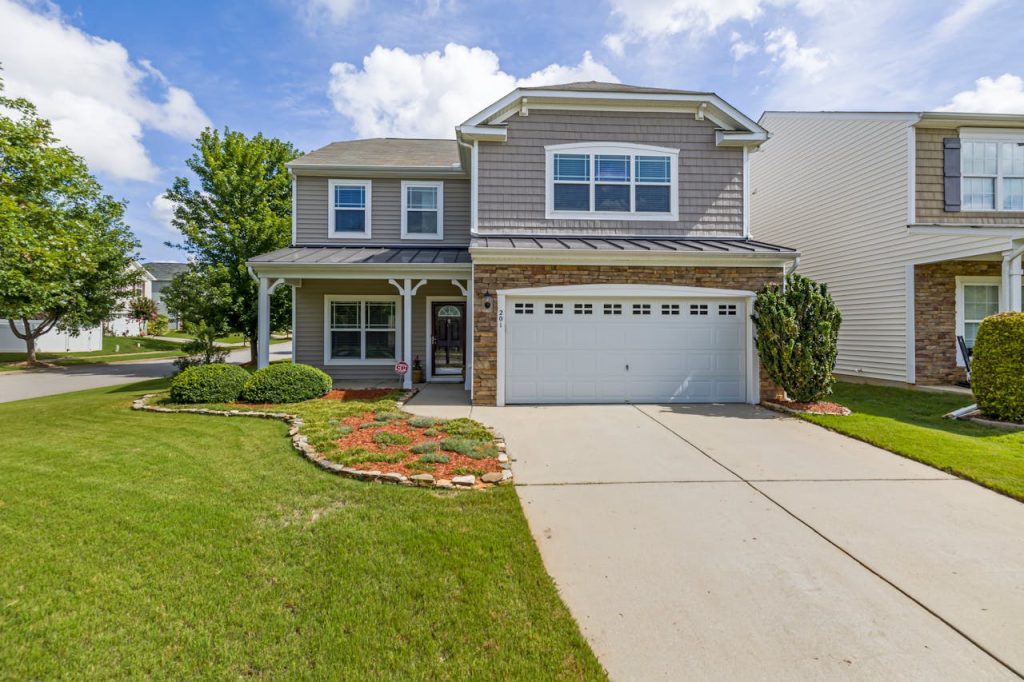
Garage door designs that work best with craftsman-style homes incorporate wood or wood-look panels, simple lines, and grid-patterned windows. They complement the craftsman home’s wide porch, tapered columns, and earthy tones. Many people choose carriage house doors because their timeless style melds well with craftsman detailing. Recessed panel doors with iron handles complement the Craftsman style. Most craftsman homes use the same muted colors – brown, green, or gray garage doors to blend with the house. For those seeking more natural light, incorporating small pane square or rectangular windows works well. In the following sections, discover additional style, materials, and color suggestions to assist in selecting a great match for your house.
Key Takeaways
- Choose garage door designs that utilize natural materials like wood or premium composites to emphasize the craftsman style and provide lasting resilience.
- Focus on exposed joinery and simple shapes in garage doors, as such elements embody the handcrafted aesthetic and utilitarian beauty integral to Craftsman architecture.
- Think about deep overhangs and architectural details that make the design feel weather protective and cohesive with the home.
- Consider garage door styles such as carriage house, recessed panel, full-view glass, or faux wood composite that strike the perfect balance between classic artisan touches and contemporary functionality.
- Opt for a color scheme featuring earth tones, subdued shades, or strategic pops of bold color that harmonize with the natural environment and architectural details of your home.
- Be sure to evaluate proportions and scale so that your garage door complements the visual harmony, functionality, and curb appeal of your craftsman-style home.

Understanding Craftsman Architecture
Craftsman architecture is notable for its truthful use of materials and emphasis on handwork and simplicity. This style emerged as a reaction against the ornate Victorian period, emphasizing simplicity, natural materials, and attention to design. The aesthetic is frequently associated with bungalows, which have their own architectural style characterized by low, wide shapes, deep porches, and intimate, single-story floor plans. These houses emphasize horizontal lines, open floor plans, and a fluid connection between indoors and outdoors. Key visual cues are low-pitched gabled roofs, exposed rafters, and deep overhangs that combine for an overall warm, inviting feel. Written with wood, stone, and visible joinery, it pays homage to craft and tradition while maintaining an earthiness and accessibility.
Natural Materials
- Solid hardwoods like oak, mahogany, and cedar
- Stone, such as river rock or fieldstone
- Hand-forged iron and copper accents
- Natural clay tiles and brick
Selecting the appropriate wood species is crucial for garage doors. Oak and mahogany are favorites for strength and fine graining. Cedar resists weather and gives a warm hue. Natural stains, like clear varnish or oil, keep the wood aesthetic front and center, allowing its tone and grain to shine. All selected materials need to coordinate with the balance of the home. A stone-accented door, for example, should resonate with other stones in the home to maintain a seamless flow.
Exposed Joinery
Exposed joinery is a hallmark. Mortise and tenon or pegged connections don’t just look good; they make the build stronger and allow homeowners to experience the craftsmanship. Classic joinery details, such as through-tenons, may be incorporated into garage door panels for an authentic craftsman feel.
Custom garage door makers can throw in hand-cut dovetails or wooden pegs. This attention to detail distinguishes craftsman homes from mass-produced designs and resonates with a profound appreciation for the builder’s craft.
Simple Forms
Maintain simple shapes and clear lines. Craftsman-style garage doors typically utilize flat or gently arched panels and divided windows, avoiding heavy trim or additional carving. This suits the style’s no-fuss personality.
Don’t overdo it: ornate scrollwork or flashy hardware can clash with the craftsman look. Instead, adhere to functional things like robust handles or basic windows that illuminate. Matching the form of the garage door with the lines of the house, for example, echoing roof angles or porch rails, helps everything look like it belongs.
Deep Overhangs
Deep overhangs are practical and good-looking. They protect garage doors from rain and sun, which helps wood endure and makes the entry cozier. Overhangs further lend depth to the facade, interrupting blank planes and attracting attention.
The overhang needs to tie into other features, such as porch roofs or window eaves, to achieve a balanced appearance. A properly sized overhang has the added benefit of helping the garage door feel more in scale with the rest of the house, something that’s key to curb appeal.
The Best Craftsman Garage Door Designs
Craftsman-style garage doors are known for their straightforward design, organic textures, and symmetrical lines. They complement almost any type of home, from traditional to contemporary. Many homeowners select wood for its warmth and classic appearance, while newer materials provide the same appeal with reduced maintenance. When selecting a garage door, consider what it will contribute to your home’s aesthetic and how convenient it is to operate daily.
The Carriage House
Carriage house doors evoke a historic look and rustic appeal. These doors sometimes use wood or faux wood for a warm, textured look. They have cross-bracing and vertical planks reminiscent of old carriage entrances. Decorative hardware like black metal handles, hinges, or clavos provides detail and polish. For color, earth tones and muted shades are best, as they complement Craftsman palettes and do not dominate the home’s personality. Modern carriage house doors are frequently of a sectional design, lifting easily, so you maintain old-world style with new-world convenience.
The Recessed Panel
Recessed panel garage doors add depth and understated sophistication. These panels fragment the surface, making the door appear less planar and more handcrafted. A plain grid of square or rectangular panels complements nicely the uncluttered horizontal lines of a Craftsman home. Adding a darker or lighter trim can make the panel details pop and still fit the understated Craftsman theme. Quality counts; select solid wood or steel with wood finish doors for durability and longevity. Good insulation keeps the garage comfortable and reduces energy consumption.
Recessed panel designs can be custom-fit to any home. With their minimalist lines, they won’t clash with other details, so they’re a safe choice for both traditional and modern Craftsman homes.
The Full-View Glass
Full-view glass doors provide a modern, luminous appearance. They combine contemporary flair with traditional Craftsman forms. Safety glass, such as tempered or laminated glass, must always be utilized. Make it private with frosted or tinted glass or install clear panels higher up. Others incorporate metal grilles running through the glass panes, providing the door with a handcrafted Craftsman feel.
Glass doors work great for homes with covered entries or mild climates because too much sun can bake your garage and fade finishes. These doors are great if you want to open up the space and bring in light, such as with workshops or hobby spaces.
The Faux Wood Composite
Faux wood composite doors recreate the look of wood but require minimal maintenance. The finish is designed to reveal genuine wood grain, so you achieve the appearance without the maintenance. These materials resist rot, sun damage, and warping, which is key if your house gets a lot of rain or sun.
You get to choose from a wide range of colors and textures, making it simple to coordinate your door with your home. Certain brands allow you to incorporate custom windows or hardware for a more individualized style. It’s even insulated, which is great for comfort and energy savings.
Choosing Your Garage Door Material
Choosing your garage door material for a craftsman-style house is about considering which material best suits the aesthetics and purpose you desire. Integrity, maintenance, insulation, and curb appeal all impact the factor. Certain materials lend themselves better to the craftsman aesthetic. The table below outlines the main choices and their benefits:
Material | Key Benefits | Notes |
Natural Wood | Warm, classic look; customizable; strong curb appeal | Needs upkeep; higher cost |
Steel | High strength; low maintenance; secure | May dent; finish options vary |
Composite | Durable; looks like wood; low upkeep | Good insulation; cost varies |
Aluminum | Lightweight; rust-resistant | Can dent; less craftsman-friendly |
Natural Wood
Natural wood continues to be the preferred choice for craftsman homes, offering warmth and a classic appearance. Oak, cedar, and mahogany are typical, each providing a distinct grain and richness. Rich stains emphasize the wood’s color and texture, adding depth and showcasing the natural grain. A hardy, quality finish keeps out moisture and sun damage. Maintenance is key: wood garage doors need regular sealing, staining, or painting to last, as untreated wood can warp or rot. For the artfully inclined, wood opens up the option of custom touches, such as paneling, crossbeams, or hand-carved details that complement the craftsman aesthetic.
Steel
Steel garage doors appeal to homeowners seeking durability and minimal maintenance. Contemporary steel doors withstand severe weather and can endure for years with minimal maintenance. Insulated models help regulate your garage’s temperature and reduce energy costs. To complement the craftsman style, select steel doors with raised panels or include simulated wood overlays. Many steel doors are offered in realistic wood-grain finishes, or you can select striking paint colors for a personalized appearance. With so many finishes and design choices, steel can easily become part of the home’s look if selected thoughtfully.
Composite
Composite garage doors blend wood fibers and resins for a durable, stable product. These doors resist moisture, heat, and cold, so they barely ever warp or crack. Most composites simulate wood’s appearance, providing grained finishes and a variety of stains or paints. Maintenance is minimal—just hose them off every once in a while. If you have a craftsman home, select composite doors with grid windows, vertical panels, or trim accents. Composites insulate well, which helps cut energy bills if the garage connects to the house.
Essential Design Elements
Craftsman garage doors have to complement the natural beauty, crisp lines, and quiet colors that make this architecture so special. The design just has to be right, respecting the home’s rustic, hand-made look and use of wood, stone, and other earthy materials. Here are the key elements:
- Natural materials include wood or wood-look composites.
- Simple shapes, clean horizontal lines, and minimal ornamentation
- Earthy or muted color palettes that complement the house’s exterior.
- Glass features for light and outdoor connection
- Attention to craftsmanship in joinery and surface finishes
- Hardware that is sturdy and decorative, but not overdone
- Panel layouts that echo the home’s simple geometry
- Personalized accents that demonstrate personal style and complement the theme.
Window Grilles
Window grilles bring detail and depth to garage doors, helping them feel less like a flat surface and more along the lines of craftsman ideals. Pattern selection matters—rectangular or square grids, sometimes with a prairie-style motif, best complement the subtle geometry found in Craftsman windows across the house. Aluminum and steel grilles are more durable and require less maintenance than wood, particularly in adverse weather conditions. Size and placement should balance with the door size. Windows at the top third of the door let in light but keep privacy, while smaller panes mirror the home’s existing window pattern. Excessive glass or ornate grilles can conflict with the tranquil, understated aesthetic of Craftsman design.
Panel Layout
Panel design determines how the garage door blends with the rest of the home. Classic craftsman paneling employs multiple horizontal panels, frequently separated by vertical stiles, to highlight the broad, grounded appearance of the design. Plain, recessed rectangles are optimal, skipping raised or ornate designs. Too many panels can make the door look busy, which is why three or four wide panels often look just right. Some owners modify panel layouts to get a personalized look, but it’s wise to follow the home’s lines and balanced shapes in the design.
Decorative Hardware
Ornamental hardware, including straps, handles, and hinges, adds an air of old-world quality and artistry. For craftsman homes, black or oil-rubbed bronze hardware with a rugged, uncomplicated shape looks best. Handles set at a comfortable height and matching hinge straps at the panel breaks provide a cohesive impact. The hardware should be real metal, not plastic, to maintain that sense of authenticity and endure years of use. Too much hardware will appear incongruous. Therefore, restraint is pivotal.

Selecting The Right Color Palette
With choosing colors for garage doors on craftsman-style homes, it’s about honoring tradition and context. Craftsman architecture appreciates natural materials, low-key modesty, and balance, so your palette should reinforce those themes. Most properties use three main colors: a dominant field color, a trim color, and one accent. All contribute toward framing first impressions and curb appeal. Natural hues pulled from local stone, earth, or wood assist in strengthening the craftsman’s aesthetic, whereas light variations throughout the day alter the way each color reads. By adhering to time period-appropriate combinations, as opposed to trendy shades, you’re guaranteeing the garage door will complement the home’s personality and area.
Earth Tones
Earth tones provide warmth and a grounded look to the garage. Seek out the browns that resemble natural wood, deep greens that harmonize with the landscaping, and the muted yellows of clay or sand. These colors emphasize panel or overlay door craftsmanship. They happen to pair beautifully with stone bases, wood columns, and shingle siding common to Craftsman homes. When combined with tones on trim or eaves, earth colors have a soft, almost seamless appearance. If the house employs brick or local stone, echoing those colors in the garage door helps unify the design. Earth tones help make sure the garage isn’t ripping out at you in a harsh way, but adding subtle richness.
Muted Hues
Muted colors provide those touches of sophistication without being ostentatious. Muted blues, dusty olives, and soft greys can all play their part if selected carefully. These shades provide dimension and make things interesting, particularly if the rest of the house is covered in neutral field colors. Soft hues don’t distract from the architecture, but they still make the garage door look polished. Muted palettes work well with minimalistic designs, with their clean lines and understated style. The effect is timeless and plays well with a lot of different areas and light patterns. Cb02 Selecting the right color palette. Opt for understated tones that reflect nature, such as slate grey or sage green, to keep you grounded.
Bold Accents
Bold colors are best used as accents, not your field color. Use deep reds or navy blues to border panels or stained-glass windows. These accents pop and demonstrate without dominating. Combining a bold accent with earth or muted base tones keeps the palette grounded. One bright spot color, like in colonial revival homes, can bring a pop of personality without abandoning the craftsman tradition. Just be certain the bold accent works with the rest of the home’s colors. Too much contrast can shatter the harmony, and a strategic accent adds a cool modern spin to the garage.
Beyond The Door: Proportions And Scale
About: Beyond the Door: Proportions and Scale. Having these dialed in is more than a design quirk. It is critical for maintaining the home’s clean, balanced appearance. Nearly all Craftsman homes employ clean, simple lines, unpretentious earthy colors, and organic materials. When choosing a garage door, these characteristics are important. A door that is too big or too small can ruin the balance of an entire facade.
Consider the scale of the garage door in relation to the home. A door that dominates can overpower the entry and make the home feel off-kilter. Too small, and a door just looks out of place and makes the house look weird. Your optimal match is a door that aligns with other horizontal elements of the house, like trim, siding, or porch details. This maintains the visual weight balanced and the appearance cohesive. For instance, a double-width door, which is approximately 4.8 meters wide, is usually great for larger Craftsman homes, whereas a single door, which is 2.4 to 3 meters wide, suits smaller facades more.
Color and finish are equally crucial. Craftsman-style garage doors typically employ warm, earthy colors like cedar, walnut, or muted greens. These hues assist the door in blending with the household woodwork and landscaping. Even for steel doors, a natural wood finish can emulate the artisan-crafted aesthetic that gives Craftsman style its signature look. Plain metal hardware and clavos, tiny nailhead embellishments, bring a little detail without being busy.
Garage door windows, particularly divided lites or true divided lites, add that touch of detail that aligns with the home’s windows. Except for a few small panes, they maintain the sleek appearance, allowing natural sunlight in, which adds warmth to the interior. Straight, symmetrical patterns and horizontal panels maintain the simplicity of design and complement the lines found elsewhere in the home. These touches, when matched to the home’s scale, help make the door feel like part of the structure, not just an add-on.
Conclusion
To choose a garage door to match a craftsman-style home, seek clean lines, solid panels, and true wood or wood-look finishes. A genuine craftsman door features upper windows, grid patterns, and bold trim. Warm, earthy colors help the door blend with stone or brick and accentuate the home’s silhouette. Balancing the size of doors with a strong look helps keep the house authentic. A good door doesn’t just suit the style; it lasts, functions, and highlights the home’s best features as well. To achieve a door that complements your home’s character, refer to actual examples or consult with a local builder familiar with craftsman work.
Frequently Asked Questions
1. What Garage Door Styles Best Match Craftsman Homes?
Carriage-style garage doors with windows and simple trim work with Craftsman homes. These doors echo the hand-crafted, natural aesthetic that is synonymous with Craftsman design.
2. Which Materials Are Ideal For A Craftsman-Style Garage Door?
Wood and steel are customer favorites. Wood provides an authentic, warm look, whereas steel is incredibly durable and can be crafted to replicate wood grain.
3. What Colors Work Best For Craftsman Garage Doors?
Earth tones like brown, green, and beige go with Craftsman homes. These colors meld with the natural surroundings and highlight architectural details.
4. Are Windows Necessary In A Craftsman-Style Garage Door?
Windows are recommended. Square or rectangular window panes in the upper section bring in light and still fit with Craftsman design conventions.
5. How Important Are Proportions And Scale For Craftsman Garage Doors?
Proportions and scale are key in determining which garage door designs complement craftsman-style homes best.
6. What Hardware Details Suit A Craftsman Garage Door?
Simple, black or dark bronze handles and hinges complement Craftsman style. These elements mimic the hand-forged metalwork of Craftsman homes.
7. Can Modern Materials Still Achieve A Craftsman Look?
Yes. New-age materials like insulated steel or composite can mimic the Craftsman appearance and provide superior longevity and insulation.
Transform Your Home With Garage Door Design That Boosts Curb Appeal
Your garage door isn’t just a way in and out—it’s one of the first things people notice about your home. The right design can dramatically improve curb appeal, add value, and give your property the polished look it deserves.
For over 20 years, Bay Area Doors has been helping homeowners across the San Francisco Bay Area upgrade to garage doors that fit their home’s style perfectly. From sleek modern panels to timeless carriage designs, we install doors that enhance your home’s exterior and reflect your personal taste.
With options in colors, materials, windows, and decorative hardware, we’ll help you find a garage door that ties your whole property together. Our expert team makes the process simple and stress-free, delivering quality installation backed by our workmanship guarantee.
Trusted by thousands of Bay Area homeowners and backed by five-star reviews on Google, Yelp, and Nextdoor, Bay Area Doors is your local partner for stylish, lasting garage door upgrades.
Ready to boost your curb appeal? Contact Bay Area Doors today and see how the right garage door design can transform your home.